|
|
The Meaning of the Name Schweigler
|
 |
|

|
The Flute
Does the name Schweigler and its derivatives descend from
the "Schwegel-Flute"?
Originally with Schwegel Flutes wehre different kinds of
longitudinal flutes, which
often in-handle at the same time with a drum were played.
The designation „Schwegel “
is Germanic origin, the gothical Swiglja means Flute. In the
Middle Ages one used the
German designation „Swegel, Schwegel “ (old-high-German
„suegala “= seeming leg bone).
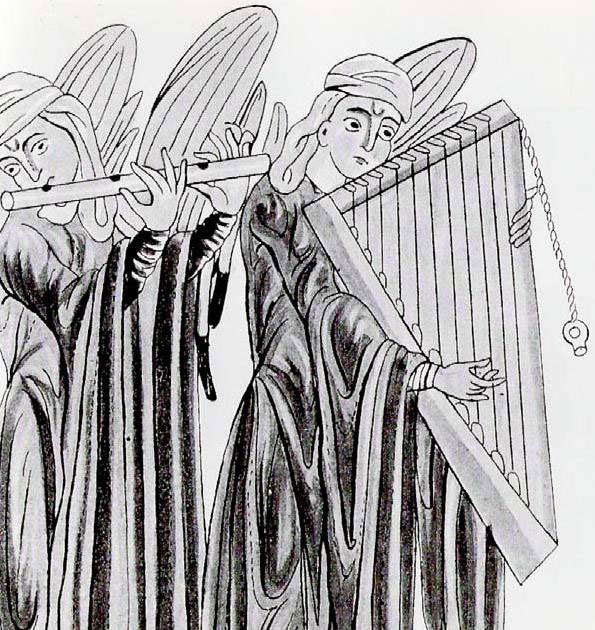
Outside of the German-language range is the
Schwegelpfeife in Europe today still as instru-
ment of the people music known;
in Slovenia under the name „Zvegle “,
in Romania under „“or „Piculina “abates,
in Hungary under „Oldal fùvòs “,
„Pikula “or
„Flòta “and in the Slowakei under „Flauta
“admits. In older sources, like for example
„the Hortus deliciarum “ the Sister Herrad of
Landsberg (around 1185), became also
„swegel “clearly the transverse flute name.
The Shepherd
They accompanied his armed force as Sheperd's on the raid
from Mongolia in
12. Century to Austria. For a commander like Genghis Kahn
was the supplies of food
and meat of strategic important.
Shepherding is one of the oldest professions, beginning
some 6,000 years ago in Asia
Minor. Sheep were kept for their milk, meat, and
especially their wool. Over the next
millennia sheep and shepherding spread throughout Eurasia.
Some sheep were integrated in the family farm along with
other animals such as pigs
and chickens. To maintain a large herd, however, the sheep
must be able to move
from pasture to pasture, this required the development of
a profession separate from
that of the farmer. The duty of shepherds was to keep
their flock intact and protect
it from wolves and other predators. The shepherd was also
to supervise the migration
of the flock and ensured they made it to market areas in
time for shearing. In ancient
times shepherds also often milked their sheep, and made
cheese from this milk.
In many societies shepherds were an important part of the
economy. Unlike farmers,
shepherds were often wage earners, being paid to watch the
sheep of others.
Shepherds also lived apart from society, being largely
nomadic. It was mainly a job of
solitary males without children, and new shepherds thus
needed to be recruited
externally. Shepherds were most often the younger sons of
farming peasants who did
not inherit any land. Still in other societies, each
family would have a family member
to shepherd its flock, often a child, youth or an elderly
who couldn't help much with a
harder work; these shepherds were fully integrated in
society.
Shepherds would normally work in groups either looking
after one large flock, or each
bringing their own and merging their responsibilities.
They would live in small cabins,
often shared with their sheep and would buy food from
local communities. Less often
shepherds lived in covered wagons that traveled with their
flocks.
Conclusion
The most probable meaning is that Schweigler were Shepherd's
on the Raid with
Genghis Kahn and for the calming down the animals they
played the "Schwegel-Flute"
|